
How High Pressure Misting Systems Actually Use Water
Standard Flow Rates (GPM/GPH) and the Role of PSI in Droplet Formation
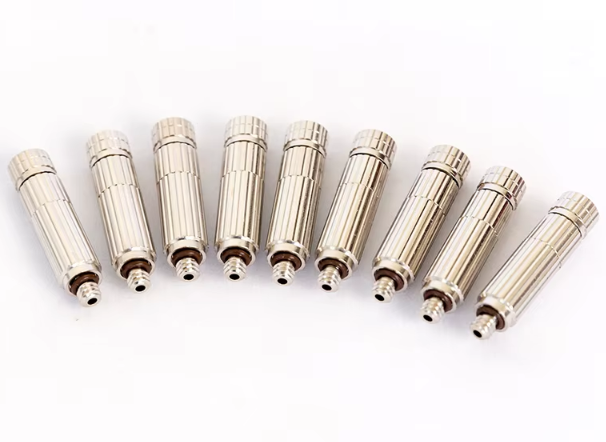
High pressure misting systems run between around 800 to 1,200 PSI, creating tiny droplets measuring 5 to 30 microns across. To put that into perspective, these droplets are actually smaller than the average human hair strand. The really small size makes all the difference for water conservation. When water breaks down into such microscopic particles, it creates a much larger surface area relative to volume. This means most of the water evaporates almost instantly, typically within less than a second, without leaving surfaces damp or wet. And because so little water remains after evaporation, the overall consumption drops dramatically when compared to standard low pressure systems. We're talking about flow rates as low as 0.5 to 1.5 gallons per minute from each nozzle, which translates to roughly 0.8 to 2.2 gallons per hour at the system level. That kind of efficiency saves both water and money over time.
| Pressure (PSI) | Droplet Size (Microns) | Flow Rate (GPH) | Evaporation Speed |
|---|---|---|---|
| 200–500 | 50–100 | 3.5–6.0 | >3 seconds |
| 800–1,200 | 5–30 | 0.8–2.2 | <1 second |
Per the Cooling Technology Institute’s 2024 benchmarking report, high pressure systems achieve 95% evaporative efficiency at ≥800 PSI—whereas low-PSI systems waste up to 40% more water through runoff and incomplete evaporation.
Why Higher PSI Improves Evaporative Efficiency—Not Water Waste
Higher pressure doesn’t increase water use—it redefines how water delivers cooling. At 1,000 PSI:
- Droplet surface-area-to-volume ratio increases by ~300%, accelerating heat absorption from ambient air;
- Flow rates fall by ~60% versus 300-PSI systems while covering 50% more area (ASHRAE 2023);
- Misting cycles shorten to 30–90 seconds, reducing cumulative consumption without sacrificing thermal output.
The physics is unambiguous: finer mist = faster evaporation = less water per degree of cooling. Facilities operating 1,000+ PSI systems report 45% lower annual water consumption than those using traditional evaporative coolers (Industrial Cooling Report, 2024).
High Pressure Misting System vs. Other Cooling Methods: A Water Use Comparison
Low- and Mid-Pressure Misting Systems: Higher Flow, Lower Efficiency
Systems operating at lower pressures around 50 to 60 psi and those running at medium pressures between about 150 and 300 psi tend to create bigger droplets, sometimes going over 50 microns in size. These larger droplets cut down on how well they can evaporate, leading to efficiency losses of roughly 40 percent. The real impact? Water consumption goes way up. Take a look at the numbers: standard low pressure systems typically guzzle about 4.8 gallons per hour, whereas their high pressure counterparts manage to get away with just 2.5 gallons for the same job. Medium pressure equipment does offer better control over moisture levels, no doubt about that. Still, these systems end up using almost 92% more water than high pressure options when trying to achieve similar cooling effects according to recent data from the 2024 HVAC Efficiency Benchmarks report.
High Pressure Misting System vs. Traditional Evaporative Coolers and Fans
When it comes to efficiency, high pressure misting beats standard cooling approaches in several key areas including water consumption, cooling effectiveness, and overall energy needs. Take industrial evaporative coolers for instance they guzzle around 6.2 gallons per hour. High pressure systems can match or even surpass these results while using just 2.5 GPH that's less than half the amount! What's more impressive is the actual cooling effect. These systems create temperature drops of about 22 degrees Fahrenheit, which is twice what most swamp coolers manage their typical drop is only around 11 degrees. The real game changer though lies in those tiny droplets measuring under 10 microns in size. Because they're so small, they tend to evaporate completely before ever reaching surfaces. This means no annoying humidity spikes or puddles forming around equipment something that plagues many traditional cooling setups.
| System Type | Water Use (Gal/Hour) | Temp Reduction (°F) | Energy Use (kWh) |
|---|---|---|---|
| High Pressure Misting | 2.5 | 22 | 0.25 |
| Traditional Evaporative | 6.2 | 11 | 0.45 |
| Low-Pressure Misting | 4.8 | 14 | 0.38 |
This confirms high-pressure misting delivers 67% greater cooling efficiency per gallon and cuts energy use by 44% versus evaporative coolers—while fans, which only recirculate air, provide no evaporative cooling benefit at all.
Real-World Water Efficiency Metrics for Commercial High Pressure Misting Systems
Gallons Per Hour per Square Foot Cooled: Benchmarking Performance
Commercial high pressure misting systems typically consume 0.3–0.8 GPH per square foot under moderate climate conditions—enabled by precise 1,000+ PSI nozzle engineering that ensures droplets evaporate mid-air. This benchmark reflects real-world optimization, not lab idealism. Key performance drivers include:
- Ambient humidity: Below 40% RH accelerates evaporation and can reduce consumption by up to 25%;
- Nozzle placement: Strategic density minimizes overlap and oversaturation;
- Cycling logic: Intermittent operation during peak heat preserves water without compromising comfort.
Well-configured installations consistently use 50% less water per cooled square foot than low-pressure alternatives—making them especially valuable for large-scale commercial sites where water cost and sustainability reporting directly impact operational budgets.
Case Data: Verified Consumption from Hospitality and Industrial Installations
Real-world deployments validate these metrics across diverse environments. A luxury resort chain reduced annual pool-area water use by 1.2 million gallons after retrofitting with high pressure misting—maintaining 20°F temperature drops at just 0.5 GPH/sq ft. Industrial applications show even stronger returns:
| Setting | Coverage Area | Avg. Consumption | Savings vs. Swamp Coolers |
|---|---|---|---|
| Warehouse Aisles | 10,000 sq ft | 220 gal/day | 68% reduction |
| Factory Floor | 8,500 sq ft | 180 gal/day | 72% reduction |
These outcomes stem from targeted evaporation—not generalized humidification—and are enhanced by zone-based controls (e.g., motion-triggered activation in workstations). From humid coastal restaurants to arid distribution centers, high pressure misting proves adaptable, reliable, and the most water-conscious cooling solution available today.