
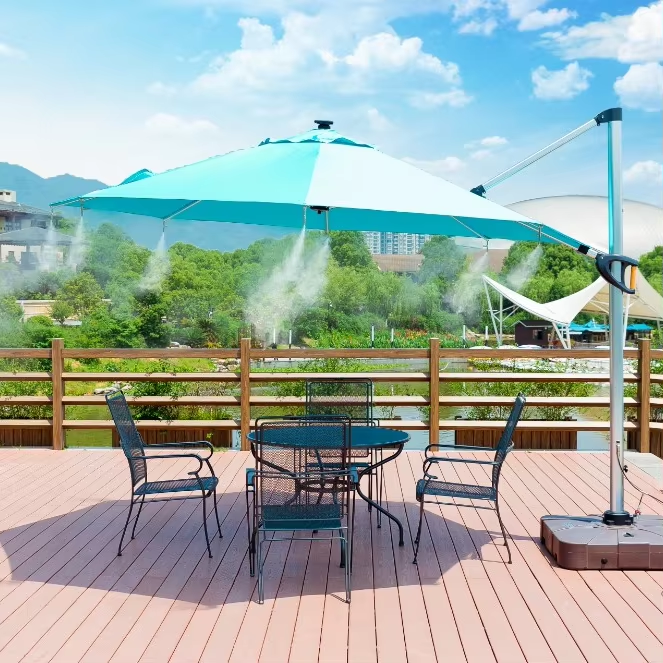
High-Quality Materials for Long-Lasting Misting Machine Construction
The durability of commercial misting machines hinges on strategic material selection across all components. Let’s break down how material science translates to multi-year performance.
Stainless Steel vs. Corrosion-Resistant Plastics in Frame Construction
| Material | Advantages | Limitations |
|---|---|---|
| 316L Stainless Steel | Saltwater/chlorine resistance | Higher upfront cost |
| Fiber-Reinforced Nylon | 40% lighter weight | UV degradation over time |
Stainless steel dominates coastal installations, surviving salt spray that erodes aluminum frames in under three years. Engineering-grade plastics like PVDF reduce weight by 25–30% for rooftop systems while offering superior resistance to pool chemicals compared to standard polymers.
Tubing Materials and Pressure Ratings (1000 psi or Above)
High-pressure misting systems require seamless stainless steel with burst pressures exceeding 1,500 psi or reinforced thermoplastic tubing featuring spiral-weave cores. Systems using sub-1000 psi tubing experience 68% more seasonal leaks (HVAC Industry Report 2023). Dual-layer extruded lines prevent micro-cracks caused by vibration stress, especially in fan-mounted configurations.
How Material Selection Enhances Resistance to Environmental Stressors
UV-stabilized polymers resist embrittlement in desert climates, while copper-nickel alloys minimize scale buildup in hard water regions. Thermal expansion is critical in transitional zones—brass fittings maintain seal integrity across -20°F to 120°F temperature swings better than zinc-based alternatives.
Impact of Build Quality on Structural Integrity Over Time
CNC-machined stainless steel manifolds last over 12 years, outperforming stamped versions that fail within 3–5 years. Precision-ground nozzle seats eliminate 92% of mist-direction drift seen in cast components. Every 0.001” improvement in pump housing tolerances correlates to an 18-month extension in service life.
Robust Pump Design and Motor Durability in High-Pressure Misting Machines
Piston Design and Valve Efficiency for Consistent Performance
Piston pumps built with precision work great in those high pressure misting systems we see everywhere these days. When manufacturers pair stainless steel pistons with valve plates reinforced with ceramic materials, they typically get around 94% volumetric efficiency according to Fluid Systems Journal from last year, even after running for over 5,000 hours straight. The way these axial piston designs are put together helps reduce internal leakage because of carefully controlled dimensions. This means the pump can maintain steady pressure at about 1,000 psi which is really important for getting that consistent fog effect needed in most commercial applications like cooling systems or humidification setups.
Motor Longevity and Thermal Management Under Continuous Operation
Industrial misting motors incorporate triple-layer insulation and copper-aluminum composite windings to resist thermal degradation. Thermal imaging shows these designs reduce hotspot formation by 40% versus conventional units (HVAC Tech Review 2023). Integrated cooling fins and variable-speed drives allow continuous 24/7 operation at ambient temperatures up to 122°F without performance loss.
Water Quality and Filtration: Protecting the Pump from Internal Wear
| Filtration Stage | Particulate Removal Rate | Pump Lifespan Extension |
|---|---|---|
| Pre-Sediment | 75% (50+ micron) | 1.8x baseline |
| Reverse Osmosis | 99% (TDS reduction) | 3.2x baseline |
Multi-stage filtration prevents abrasive wear from sand and silt while reducing mineral deposits. Operators who combine 5-micron filters with weekly chemical flushes report 60% fewer seal replacements.
Case Study: Pump Failure Rates in Hard Water Environments
A 12-month study of 240 misting machines in Southwest U.S. regions (18 gpg water hardness) revealed:
- Untreated systems: 87% required pump rebuilds within 8 months
- Filtered systems (10-micron + phosphate injection): 65% reduction in failures
This highlights how proactive water treatment aligns pump longevity with return-on-investment expectations.
Nozzle Reliability and Clog Resistance in Long-Term Misting Machine Use
Performance and Durability of Misting Nozzles Across Thousands of Cycles
High-quality nozzles withstand 50,000+ operational cycles when built with durable materials. Ceramic nozzles offer top-tier longevity, maintaining 89% efficiency after three years of daily use according to the 2024 Commercial Misting Report. Common options include:
| Material | Avg. Lifespan | Pressure Tolerance | Clog Resistance |
|---|---|---|---|
| Stainless Steel | 3–5 years | 1,500 psi | Excellent |
| Ceramic | 5–8 years | 2,000 psi | Exceptional |
| Brass | 2–3 years | 1,200 psi | Moderate |
Stainless steel remains ideal for coastal areas due to its corrosion resistance.
Causes of Clogging and Mineral Buildup in Misting Systems
Mineral deposits cause 78% of nozzle failures in untreated systems (Ponemon 2023). In hard water, calcium and limescale can narrow 0.006" orifices by 34% within six months (Water Quality Association 2023). Airborne dust and algae further increase clogging risks in outdoor setups.
Best Practices for Nozzle Cleaning and Preventive Maintenance
Adopt a three-step protocol:
- Monthly soak in 1:1 white vinegar solution (minimum 30 minutes)
- Mechanical clearing using 0.004" gauge needles
- Pre-filtration with 5-micron sediment filters
Systems equipped with automated flush cycles experience 60% fewer clogs than those relying on manual upkeep.
Innovations in Self-Cleaning Nozzle Technology
Third-generation nozzles feature reverse-pressure purge mechanisms, PTFE-coated anti-adhesion surfaces, and integrated scale inhibitors. Field tests show these innovations reduce maintenance needs by 40% and extend service life by 2.1 years (2024 HVAC Tech Journal).
The Role of Water Quality and Filtration in Misting Machine Longevity
How Hard Water Accelerates Component Wear and Reduces Efficiency
Water with calcium and magnesium levels above 120 ppm (2024 Water Treatment Report) leads to scale accumulation in pumps and nozzles. This increases piston chamber friction by 22% and degrades spray consistency, forcing systems to operate 15–30% harder to sustain pressure. Unfiltered hard water systems require pump replacements 2.4× more frequently than treated ones.
Essential Water Filtration Systems for Commercial Misting Machines
Multi-stage systems combining sediment filters and polyphosphate injectors address 93% of mineral-related wear. A 2023 industrial filtration study found that pairing 5-micron cartridge filters with reverse osmosis reduced nozzle replacement rates by 68% in arid climates. Duplex filtration housings enable filter changes without shutting down operations—critical for commercial continuity.
Field Data: 60% Reduction in Maintenance Costs with Pre-Filtration
In a 12-month agricultural case study, NSF/ANSI 61-certified filtration cut annual service visits from 3.1 to 1.2 per system. Facilities using pre-filters saved $740/year on seal replacements and extended diaphragm lifespans from 900 to 2,100 hours. Early adopters of automated backflush systems reported 82% fewer emergency calls related to blockages.
Proactive Maintenance and Environmental Considerations for Optimal Durability
Routine Maintenance: Seal Replacement, Lubrication, and System Checks
Preventive care is key: replace seals every 6–12 months to prevent leaks, lubricate motors annually to reduce friction by up to 40%, and conduct monthly inspections for loose fittings or corrosion—especially in humid environments. These practices extend component life by 2–3 years compared to neglected systems.
Scheduled vs. Reactive Maintenance: Long-Term Cost and Downtime Analysis
Operators using scheduled maintenance spend 55% less annually on repairs than those using reactive approaches. For example, quarterly inspections on a restaurant patio system reduce emergency service calls by 70%, cutting unplanned downtime from 14 days/year to under two.
How Dust, Humidity, Chemical Exposure, and Climate Affect Misting Machine Life
Coastal environments accelerate nozzle corrosion by 300% compared to dry regions, while industrial areas with airborne particulates demand monthly filter changes. According to the 2024 Facility Maintenance Report, systems with dust-proof seals and UV-resistant tubing in desert conditions last 8.2 years—nearly double the 4.5-year average for standard builds.
Usage Frequency and Operational Environment in Commercial Applications
High-traffic venues such as amusement parks and outdoor dining areas require misting machines rated for 12+ hours daily. These rugged models typically include reinforced brass fittings and industrial pumps, demonstrating 400% greater endurance in cycle testing than residential-grade units under commercial loads.
FAQ Section
What materials ensure the durability of a misting machine?
Use high-quality materials like stainless steel and fiber-reinforced plastics for frames, and seamless stainless steel or reinforced thermoplastic tubing for high-pressure systems.
How can environmental stressors affect a misting machine?
Proper material selection such as UV-stabilized polymers and copper-nickel alloys can enhance resistance to environmental stressors like UV radiation and hard water.
Why is water quality important for misting machines?
Poor water quality can accelerate component wear and reduce efficiency. Using multi-stage filtration systems can mitigate these issues significantly.
How often should maintenance be done on misting machines?
Regular maintenance, including seal replacement and system checks every 6-12 months, and lubrication of motors can extend the machine's lifespan.
What role does filtration play in misting systems?
Filtration protects the pump and nozzles from abrasive wear and mineral deposits, crucial for optimal operation and longevity of the machine.
Table of Contents
- High-Quality Materials for Long-Lasting Misting Machine Construction
- Robust Pump Design and Motor Durability in High-Pressure Misting Machines
- Nozzle Reliability and Clog Resistance in Long-Term Misting Machine Use
- The Role of Water Quality and Filtration in Misting Machine Longevity
- Proactive Maintenance and Environmental Considerations for Optimal Durability
- FAQ Section