
How High Pressure Misting Systems Work: Physics, Performance, and PSI Thresholds
Flash Evaporation at 1000+ PSI: Why Droplet Size Dictates Cooling Efficiency
When water is forced through tiny nozzles at over 1000 pounds per square inch, high pressure misting systems create incredibly fine droplets measuring around 5 microns in size. What happens next is pretty interesting these microscopic water particles quickly turn into vapor through what scientists call flash evaporation. This fast transformation pulls about 1000 British Thermal Units worth of heat from each pound of water in the air around them. The result? A dry cooling effect that can actually lower temperatures by as much as 30 degrees Fahrenheit. Regular low pressure systems working below 250 PSI simply don't do this same thing they spray bigger droplets that end up making surfaces wet instead. Why does all this matter? Because smaller droplets have way more surface area for absorbing heat. Research shows that particles under 15 microns offer approximately fifty times greater surface area compared to those 100 microns across according to findings published by Thermal Dynamics Research Group last year. That explains why only high pressure systems can provide real cooling without leaving things damp behind.
Dry Cooling vs. Wetness: How PSI and Ambient Conditions Determine System Behavior
Getting good results from dry cooling systems means finding the right balance between system pressure and what's going on around it, particularly when it comes to relative humidity levels. When pressures hit over 1000 PSI, water droplets basically vanish within half a second in really dry air conditions, disappearing faster than they can even fall down due to gravity. Things get tricky below 500 PSI though because the evaporation process just doesn't happen as quickly, which raises the chances of things getting damp instead of staying dry. Relative humidity plays kingmaker role here too. Once RH goes past 60%, the air starts acting almost saturated, making it much harder for moisture to disappear no matter how high the pressure might be set. Anyone running these systems knows this stuff matters a lot for day to day operations.
| Condition | Ideal PSI Range | Evaporation Time | Wetness Risk |
|---|---|---|---|
| Arid (<40% RH) | 800–1,000 PSI | <0.3 seconds | Minimal |
| Humid (>60% RH) | 1,000–1,500 PSI | 0.5–1.2 seconds | Moderate |
| Transitional | 1,000+ PSI | 0.3–0.8 seconds | Low |
In humid conditions, nozzle optimization–such as tighter orifice sizing–is essential to compensate for slower evaporation. Simply raising PSI alone won't overcome moisture saturation; fine droplet generation must accompany it.
Selecting the Right High Pressure Misting System for Your Climate and Space
Humidity Thresholds: Why Evaporative Cooling Fails Above 60% RH
The effectiveness of evaporative cooling really hinges on how much water vapor the air can take in before it gets saturated. Once relative humidity goes over 60%, things start breaking down pretty quickly. When air is already loaded with moisture, it just won't pick up any more vapor from the system. That's why we often see mist hanging around instead of disappearing, settling on surfaces, or simply failing to do its job properly. Looking at actual field measurements, when RH exceeds 60%, the temperature drop typically plummets to around 5 degrees Fahrenheit or less. Compare that to what happens in dry areas where temperatures can actually fall between 20 and 30 degrees. For installations in places that stay consistently moist throughout the year, throwing more pressure at the problem isn't going to cut it. Proper nozzle choices matter a lot here, along with where those nozzles are placed strategically across the space. Otherwise, workers end up dealing with all sorts of discomfort issues from excessive mist buildup.
Nozzle Orifice Sizing Strategies for Dry vs. Humid Environments
Nozzle orifice diameter governs both droplet size and evaporation speed–making it a critical climate adaptation tool. Smaller orifices yield finer mist, accelerating flash evaporation even in challenging conditions:
| Climate Type | Orifice Size | Droplet Target | PSI Requirement |
|---|---|---|---|
| Arid (<40% RH) | 0.3–0.4 mm | 15–20 microns | 750–1,000 PSI |
| Humid (>60% RH) | 0.1–0.2 mm | 5–10 microns | 1,000–1,500 PSI |
Bigger holes work just fine in arid areas since the environment naturally dries things out pretty fast even when the pressure isn't too high. But humidity tells another story altogether. When moisture hangs around, there's really no alternative to those super fine sprays we talk about. The tiny droplets below 10 microns actually vanish into thin air before they can leave surfaces damp, all while grabbing as much heat as possible during the process. And don't forget to check if the pumps will handle whatever nozzles are selected for the job. Getting the right match between pump power and nozzle requirements ensures proper pressure stays constant without losing precious water flow somewhere along the line.
Sizing and Configuring Your High Pressure Misting System for Maximum Coverage
Calculating Nozzle Count, Spacing, and GPM Requirements by Area
Getting good coverage isn't about luck it's all about planning ahead. Place those nozzles roughly every 2 to 3 feet around the edges of whatever area needs cooling so their mist patterns overlap and there aren't any annoying hot spots left behind. Let's do some quick math here. Take the total length of your space and divide it by how far apart you want the nozzles spaced. Say we have a 60 foot long patio divided by 3 foot spacing gives us around 20 nozzles needed. Don't forget to throw in about 10 extra percent for those tricky corners and odd shaped areas. Each individual nozzle drinks between 0.1 and 0.2 gallons per minute when running at 1000 psi pressure. Most folks find that using 0.15 gpm works pretty well in practice. Multiply the number of nozzles by this figure and then tack on another 20% just because pressure tends to drop over time and who knows what expansions might come later. Looking at something like a 400 square foot patio? Go with anywhere from 15 to 20 nozzles connected to a pump that can handle 3 to 4 gallons per minute. This setup should give nice even cooling while keeping energy consumption reasonable.
| Parameter | Calculation Method | Optimal Range |
|---|---|---|
| Nozzle Spacing | Perimeter length – spacing interval | 2–3 feet |
| Nozzle Count | Linear footage – spacing + 10% corner allowance | – |
| Pump GPM | Nozzle count × 0.15 + 20% buffer | – |
Installation Essentials: Mounting Height, Orientation, and Tubing Material Selection
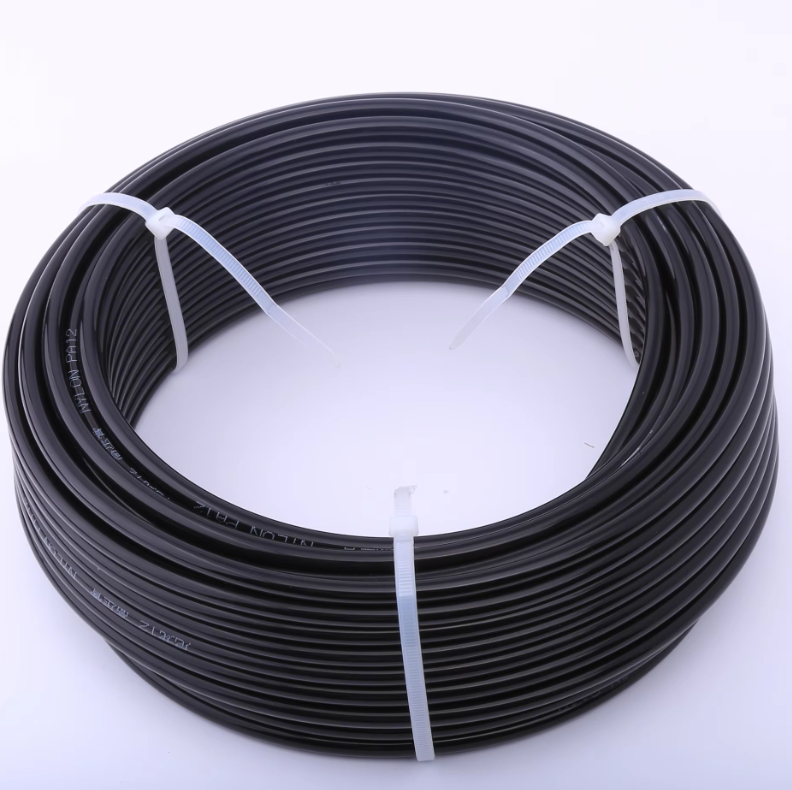
The height at which we mount these systems makes all the difference when it comes to keeping people safe and getting good results. Mist lines should be installed somewhere between eight and ten feet off the ground. That gives droplets time to evaporate completely before anyone gets near them, but still keeps things cool where people actually are. Point those nozzles down at around thirty to forty five degrees angle so they create overlapping mists that reach every corner and tackle those hot spots head on. For materials, stick with stuff that won't rust or break under pressure like stainless steel or reinforced nylon rated for at least fifteen hundred pounds per square inch. Standard PVC just doesn't cut it here folks because it breaks down fast when pushed hard for long periods and could fail spectacularly. Always go with compression fittings instead of threaded ones for connections. And don't forget about water quality either. If there's more than five grains per gallon hardness in the water supply, install some kind of filter system to keep minerals from blocking up the nozzles and messing with droplet size consistency.
FAQ Section
What is the ideal PSI range for arid conditions?
The ideal PSI range for arid conditions is between 800 and 1,000 PSI.
How does relative humidity affect misting system performance?
Relative humidity greatly affects misting performance; above 60% RH, evaporation is slower, leading to reduced cooling efficiency.
What orifice size is recommended for humid environments?
For humid environments, smaller orifice sizes between 0.1 and 0.2 mm are recommended.
How do you calculate the number of nozzles needed for an area?
You calculate the number of nozzles by dividing the perimeter length by the spacing interval (2-3 feet) and adding a 10% allowance for corners.
Why is mounting height important in misting systems?
Mounting height is crucial to ensure complete evaporation before droplets can affect people while maintaining effective cooling.