
The Science Behind Effective Patio Misting System Cooling
Evaporative cooling fundamentals: how droplet size (10–20 microns), ambient humidity, and temperature drop limits define performance
When water turns from liquid to vapor, it actually pulls heat away from whatever is around it. This basic principle makes evaporative cooling work so well. For those patio misting systems we see everywhere now, getting the right droplet size matters a lot. The ideal range is somewhere around 10 to 20 microns. These tiny drops need to stay in the air long enough to completely evaporate, but they also can't be too small or else the wind will blow them all away before they do any good. People living in really dry areas where humidity stays below 40% often notice temperature drops of about 25 degrees Fahrenheit when these systems are running. But there's a catch. As anyone who has tried to cool off on a humid day knows, things get tricky when moisture levels climb past 60%. A study published last year in the International Journal of Refrigeration showed that at those higher humidity levels, the cooling effect basically gets cut in half. So real world performance doesn't come down to simply blasting out more water. Instead, engineers have to focus on creating fast and complete vaporization that actually works with what kind of weather their customers typically experience.
High-pressure advantage: why 1,000+ PSI is essential for true no-wet mist and consistent patio misting system efficiency
Systems running below 500 PSI tend to create larger droplets around 50 to 100 microns in size. These droplets often hit surfaces before they can fully evaporate, leaving things damp instead of properly cooled. On the flip side, when systems operate between 1,000 and 1,500 PSI, they push water through tiny precision holes to make much finer mist particles measuring just 10 to 20 microns. This super fine spray evaporates almost instantly when it meets warm air, which makes these systems about 40 percent more efficient for cooling compared to their lower pressure counterparts according to recent studies from ASHRAE's technical committee. The quick evaporation process actually helps prevent minerals from building up inside the nozzles too, so the water keeps flowing smoothly and the equipment lasts longer without clogging issues. Maintaining steady pressure throughout operation means consistent droplet sizes even when conditions change outside, like on those windy restaurant patios where regular misting systems would struggle to maintain proper coverage.
Key Components That Ensure Long-Term Patio Misting System Reliability
Nozzle durability and clog resistance: stainless steel construction, self-cleaning mechanisms, and climate-tuned orifice design
When it comes to resisting corrosion and lasting longer, stainless steel nozzles beat brass hands down. They typically last 3 to 5 extra years when installed outdoors. These nozzles come with built-in cleaning features that work while they're running. Spring loaded seals inside actually push away debris as water flows through them. This helps reduce clogging problems by around 80% in places where water hardness is an issue. The size of the opening matters too. For areas with lots of humidity, manufacturers make the holes smaller, usually between 10 and 15 microns wide. That helps water evaporate better without leaving puddles. But in dry regions, they go for bigger openings, about 15 to 20 microns across. This prevents water from sitting on surfaces and causing damage. Either way, these adjustments help maintain good performance all year long without dripping.
Pump reliability essentials: oil-lubricated longevity vs. oil-free maintenance, thermal protection, and stable high-pressure output (1,000–1,500 PSI)
The oil lubricated pumps can run nonstop for over 3000 hours before needing much attention at all, which makes them great choices for busy commercial patios where downtime just isn't an option. On the flip side, oil free versions tend to be much quieter and need less day to day maintenance, so they work better in homes generally. But don't think they're maintenance free either because homeowners still need to check on them every three months or so to keep everything running smoothly. Most good quality systems come equipped with thermal cutoff switches that shut down the motor when temperatures get too hot, say anything over 100 degrees Fahrenheit, to prevent damage from overheating. When paired with accurate pressure regulators, this combination helps maintain steady pressure levels between 1000 and 1500 psi. The result? Water droplets stay below 20 microns in size, allowing proper evaporation without leaving surfaces damp or wet looking.
Weather-hardened infrastructure: UV-stabilized tubing, 5–10 µm inline filtration, and corrosion-resistant fittings for outdoor resilience
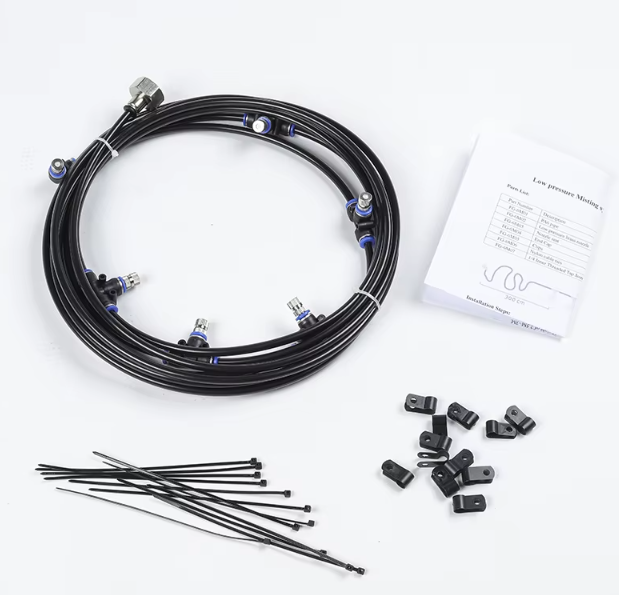
When talking about outdoor durability, we need to start looking at the basics first. UV stabilized nylon tubing is really good at resisting brittleness and cracking even after being exposed to direct sunlight for ten years or so. There's also this inline filter with 5 to 10 microns that catches all sorts of sediment and scale stuff before it reaches the nozzles. Field studies show this actually solves around 92 percent of those annoying maintenance problems people keep running into. For places near the coast or areas with lots of salt in the air, marine grade stainless steel fittings are essential because they stop galvanic corrosion dead in its tracks. Put all these components together and what do we get? A solid system that stands up to Mother Nature's worst weather conditions. We've tested this setup using accelerated aging methods that simulate five full seasons of stress according to ASTM standard G154.
Optimal Installation Practices for Real-World Patio Misting System Coverage
Precision placement: mounting height (8'–12'), nozzle spacing (24"–36"), and validated 12'–16' cooling radius for uniform mist distribution
Getting good coverage really comes down to three main things working together: how high the nozzles are mounted, their spacing, and what happens to those water droplets after they spray out. When installing nozzles, aim for about 8 to 12 feet off the ground. This height lets most of the water evaporate before it hits the ground, but still keeps it close enough so people sitting or standing can actually feel the cooling effect. Along any given line, space the nozzles between 24 and 36 inches apart. If the area tends to get windy, closer spacing helps spread things out more evenly, though without proper pressure control this can lead to too much moisture buildup. On the flip side, leaving bigger gaps between nozzles creates noticeable cold spots where some folks might not get any relief at all. Most standard nozzles cool effectively within a radius of around 12 to 16 feet when running at 1,000 pounds per square inch. HVAC technicians have seen firsthand that going outside these guidelines usually results in wasting anywhere from 30% to half of the water either as runoff or because it gets distributed unevenly across the space. Before locking in nozzle positions, take time to look at specific conditions on site. Things like which way the wind typically blows, whether there are shaded areas overhead, and exactly how people will be seated all matter a lot for getting optimal performance.
FAQ Section
What is the ideal droplet size for patio misting systems?
The ideal droplet size for patio misting systems is between 10 and 20 microns, as this allows the water to evaporate effectively and provide maximum cooling.
Why is high pressure important in a patio misting system?
High pressure, typically over 1,000 PSI, is crucial for creating fine mist particles that evaporate instantly, providing efficient cooling without leaving surfaces wet.
How can nozzle durability be ensured?
Nozzle durability can be ensured by using stainless steel construction, self-cleaning mechanisms, and designing nozzle orifices specific to regional climate conditions.
What factors affect the spacing and height of misting system nozzles?
The height and spacing of misting system nozzles need to consider factors like wind conditions, desired cooling radius, and typical seating arrangements to ensure effective mist distribution.
Table of Contents
- The Science Behind Effective Patio Misting System Cooling
-
Key Components That Ensure Long-Term Patio Misting System Reliability
- Nozzle durability and clog resistance: stainless steel construction, self-cleaning mechanisms, and climate-tuned orifice design
- Pump reliability essentials: oil-lubricated longevity vs. oil-free maintenance, thermal protection, and stable high-pressure output (1,000–1,500 PSI)
- Weather-hardened infrastructure: UV-stabilized tubing, 5–10 µm inline filtration, and corrosion-resistant fittings for outdoor resilience
- Optimal Installation Practices for Real-World Patio Misting System Coverage